Japanese Koi Breeder Harvest Auctions

Updated: Dec 23, 2025

For koi dealers, brokers, passionate collectors, and investors, the autumn harvest auctions at Japan’s top koi farms mark one of the most compelling chapters of the year. These gatherings are more than sales events; they signal the turning of the season, the culmination of a year’s work in the mud ponds, and the moment when freshly harvested Nishikigoi step into a global spotlight of bidders and buyers.
These Japanese koi breeder harvest auctions typically run from October through November, occasionally extending into early December. This isn't a coincidence, auctions are planned to accompany the annual Mud Pond Harvest. They range from single-day affairs to multi-day events. One example is the Dainichi Auction, scheduled for October 26–27, 2025, followed by a formal dinner on the 27th.

Many breeder-tour groups or dealer-tour groups include dinners, breeder-hosted hospitality, and networking events around the harvest and auction. It is common in the koi industry for breeders to host buyer dinners after the harvest draw or auction to foster relationships, show new catalogue fish, and thank international buyers.
The World Arrives at Japanese Koi Breeders
During the fall harvest, Japan’s koi breeders are like rock stars, and their communities feel like large concerts reminiscent of Glastonbury. The world of Koi Dealers, buyers, and media from all around the world have come to Japan. The auctions will be a full house of multinational attendees from Indonesia, Great Britain, Europe, North America, South America, China, Vietnam, South Africa and beyond.

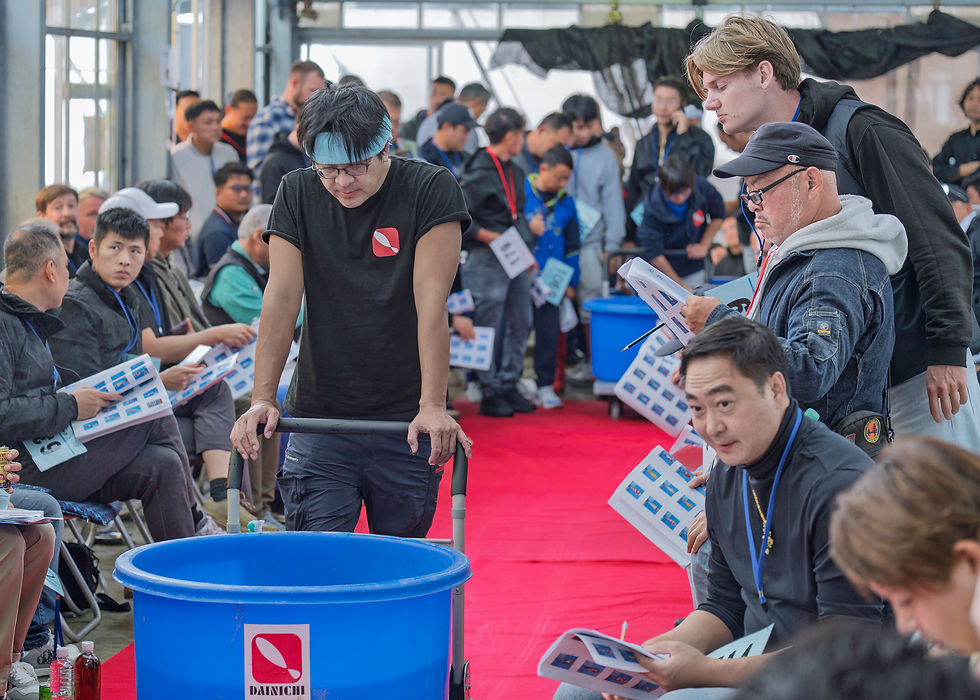
This international contingent is a highly competitive group. When a truly exceptional koi is up for auction, bidding can continue long after the bowl holding the koi has circled the crowd and been returned to its starting point. A bidder who never lowers their hand signals a clear message: they will not be outbid for that particular fish.
Dealers, meanwhile, come armed with client directives. Their job is to secure koi that match the client’s vision, aesthetic, and budget. The pressure is real. Seeing a koi that perfectly fits a client’s goals, only to be outbid by someone with a “whatever it takes” budget, is frustrating. Fortunately, with multiple auctions unfolding throughout the harvest season, another chance to fulfill their needs is possible.
The auction inventory tends to include fewer fish than general “catalogue sales” because breeders are showcasing the top crop from that year’s pond draw. The markup potential is significant — acquiring a “diamond” koi at the harvest auction can lead to a show winner, export premium, or major appreciation in value due to “tategoi” (growth potential).
Insight from a dealer
Every year, more and more auctions are being organized, something that has both advantages and disadvantages. One of the benefits is that auction lists are published in advance, allowing you to forward them to clients and bid on their behalf. For a dealer, this is essentially risk-free income: no stock, and an immediate sale once you win a koi. Perfect!
However, it’s also about securing koi at the right prices. Some days you place ten bids for clients and end up winning none. You go home empty-handed, having earned nothing. It’s hard to predict in advance how “crazy” an auction will get.
That said, I’m still a supporter of auctions, but only if enough koi are also made available through regular sales. Auctioning everything, something some major breeders are nearly doing, makes it hardly worthwhile to visit those farms. It makes you feel more like a number than a valued relationship.
Community Makes It All Special
Among the many traditions in Japanese koi culture, the harvest auction remains one of the most distinctive. Traveling from one auction to the next, it becomes clear that breeders are not only competitors — they are friends.

At a Dainichi auction, you might stand shoulder-to-shoulder with Mitsunori Isa of ISA Koi Farm. At the ISA Auction, you might run into Ryu Mano of Izumiya or Futoshi Mano from Dainichi. Breeders support one another, and their presence at each other’s events reinforces the depth of this community.
Dealers, too, share this sense of camaraderie. While each is competing for serious collectors and important clients, the tone during harvest is warm, sharing drinks, conversation, and a good time.
Maybe it’s this camaraderie that makes the harvest season gathering in Japan so special. It’s not just about the Nishikigoi; it’s about old friends and making new ones.
Koi Waters Online Magazine would like the thank Futoshi Mano and Mitsunori Isa for allowing this coverage of their auctions. It's an honor to be allowed an inside look at how and what they do.
Futoshi Mano gets things started at the Dainichi Harvest Auction 2025 Koi are paraded past bidders to get one last look before making their bid. Hands up, bidders signal the auctioneer of their intent. The parade of Koi keep coming for hours at these Koi auctions Bidding is competitive with many hands going up for prized koi The seriousness of the situation shows on bidders faces The agony of defeat is all part of the auction atmosphere The Dainichi Koi Farm Brothers are closely watching the action Pre auction inspection, catalogs in hand is time well spent by the attendees. A relaxed Mitsunori Isa at his 2025 harvest auction. Shigeru Mano, breeder at Dainichi Koi Farm checks on the koi going up for auction. Serious bidders can't be missed among the crowds Chairs line the pond houses where the Daincihi Auction takes place A quiet place to review the auction catalog at the Isa 2025 harvest auction Behind the scenes koi are inspected one last time before going up for auction Team Dainichi keep things moving along behind the scene at the 2025 Harvest Auction Lunch is Provided at Koi Auctions like Dainichi and Isa Koi Farms Preparation for the Dainichi Auction at Dainichi Koi Farm